From Beginner to Advanced Swimming: 20 Essential Tips You Need to Know!

After gaining a basic understanding of swimming techniques, the next step is to delve deeper into the finer details of swimming. Many people learn to swim not only to strengthen their bodies but also as preparation for entering the world of triathlon. However, before diving into advanced swimming skills and open-water training, it’s essential to first familiarize yourself with common swimming terminology. This way, whether you’re in a pool or by the ocean, you’ll avoid losing confidence due to unfamiliarity with the lingo.
1.Basic movements
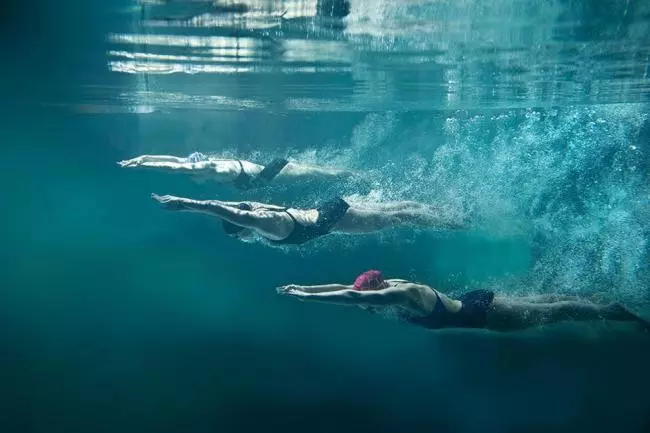
Basic movements refer to the continuous, repetitive leg, arm, and breathing actions—performed according to the specific postures and technical requirements of each swimming stroke. These movements are the fundamental building blocks that make up the complete technique of every swimming style. They play a crucial role in developing specialized physical attributes and enhancing athletes' technical skills in their respective disciplines.
2. Body Position
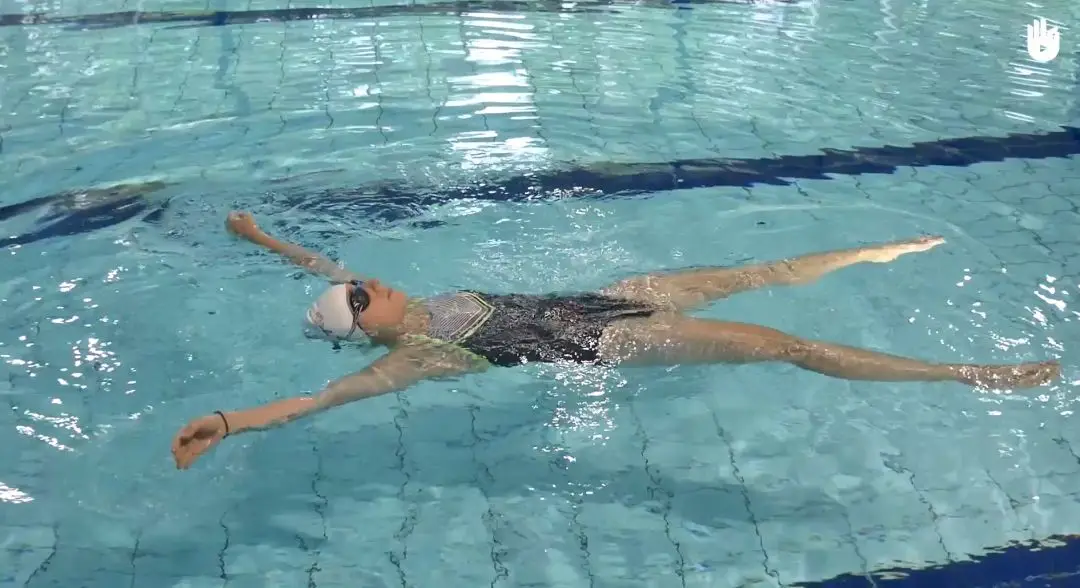
Body position refers to the way your body lies horizontally in the water during swimming, specifically how deeply—or shallowly—your hips are submerged. Simply put, it describes the relative angle of your body to the water’s surface as you move forward. This is a key factor in assessing swimming technique quality and serves as a primary reference point for teaching and refining swimming skills.
3. Body Posture
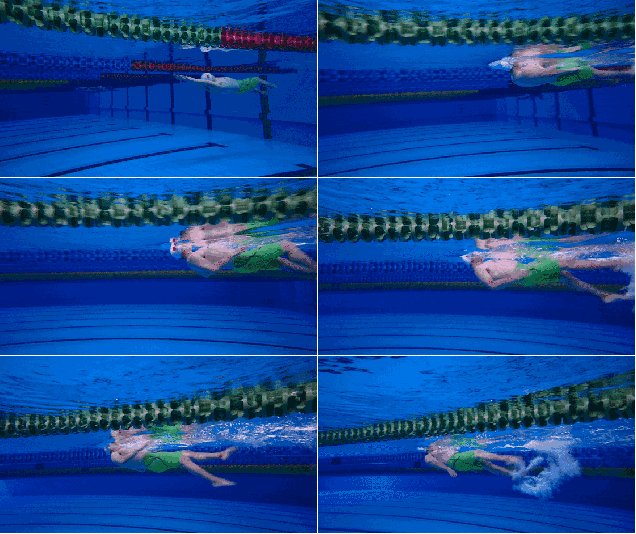
This refers to the basic body shape and positioning required when a person lies flat on the water while swimming. The fundamental postures for different swimming strokes vary slightly depending on their unique technical characteristics: In backstroke, the body should lie flat and extended on the surface, with a slight arch in the chest and hips to prevent the hips from sinking; in butterfly, the body alternates between gently contracting and extending the abdomen repeatedly, coordinating with the leg and arm movements to create a rhythmic up-and-down undulation that resembles a wave—this motion is particularly effective for generating forward propulsion.
4. Swimming Breathing
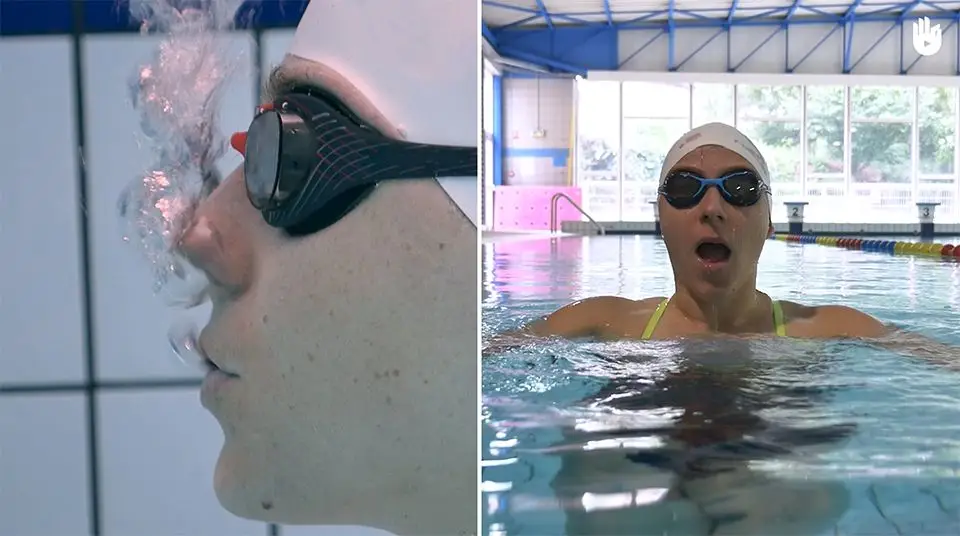
Key techniques for swimming breathing: head turns for breathing, inhaling through the mouth and exhaling through the nose—either quick inhales and slow exhales, or mastering the rhythm of inhale-hold-exhale. Different swimming strokes require distinct breathing methods: Breaststroke and Butterfly typically involve lifting the head forward to breathe, while Freestyle relies on turning the head to the side for easier, natural inhalation. In all strokes, breathing should be perfectly synchronized with the coordinated movements of your legs and arms.
5. Familiar with water skills
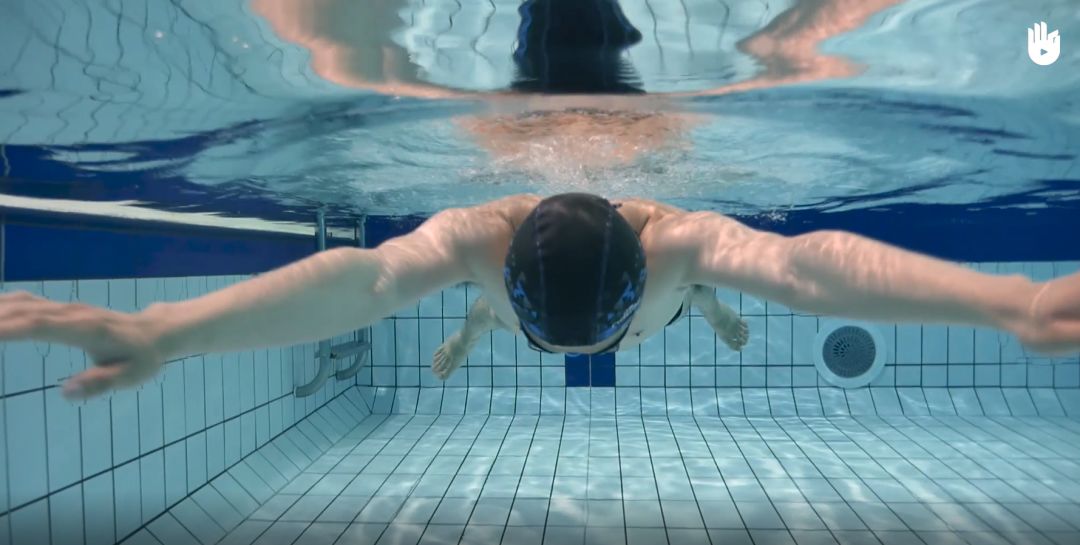
Through specific teaching methods, students are guided to recognize, experience, and master the physical properties of water, followed by instruction in the fundamental movements of swimming techniques. Practice activities include:
1. Walking in Water: Experience the Resistance of Water.
2. Buoyancy Exercises: Experience the buoyant force of water and understand the principles behind how the human body floats or sinks in water, while learning to maintain a balanced, floating position in the water.
3. Breathing Exercises: Learn and master the unique characteristics, techniques, and patterns of underwater breathing, as well as how to synchronize it rhythmically with leg and arm movements.
4. Gliding practice. Master the correct body posture, balance, and the use of reaction forces from movements like pushing and kicking to achieve gliding speed and distance.
6. Treading Water
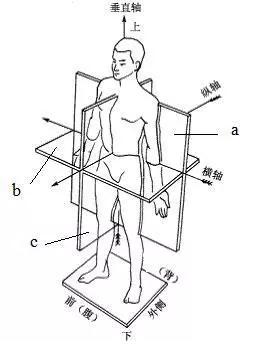
7. The Body's Longitudinal Axis
When swimming, the axis running through the body from front to back is called the longitudinal axis.
8. The Body's Transverse Axis
When swimming, the axis running horizontally through the body from side to side is called the transverse axis.
9. The Body's Vertical Axis
When swimming, the axis running vertically through the body is called the vertical axis.
10. Shoulder Roll
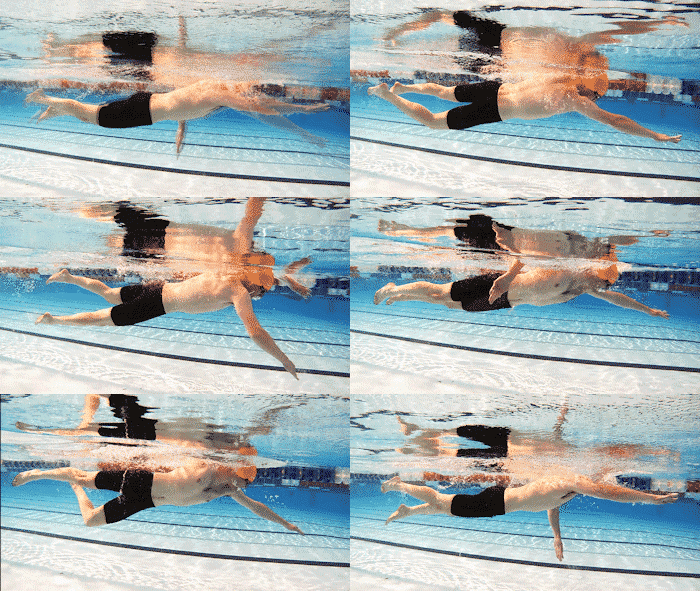
Freestyle, backstroke, and other swimming styles that involve alternating, shoulder-driven arm movements are particularly important. When swimming, the body’s midline serves as the axis, with the shoulders smoothly connecting and replacing each other as the left and right arms perform their sweeping and recovery motions—resulting in a rhythmic, undulating rotation that even causes the body to sway gently from side to side in a coordinated pattern.
11. Arm Stroke
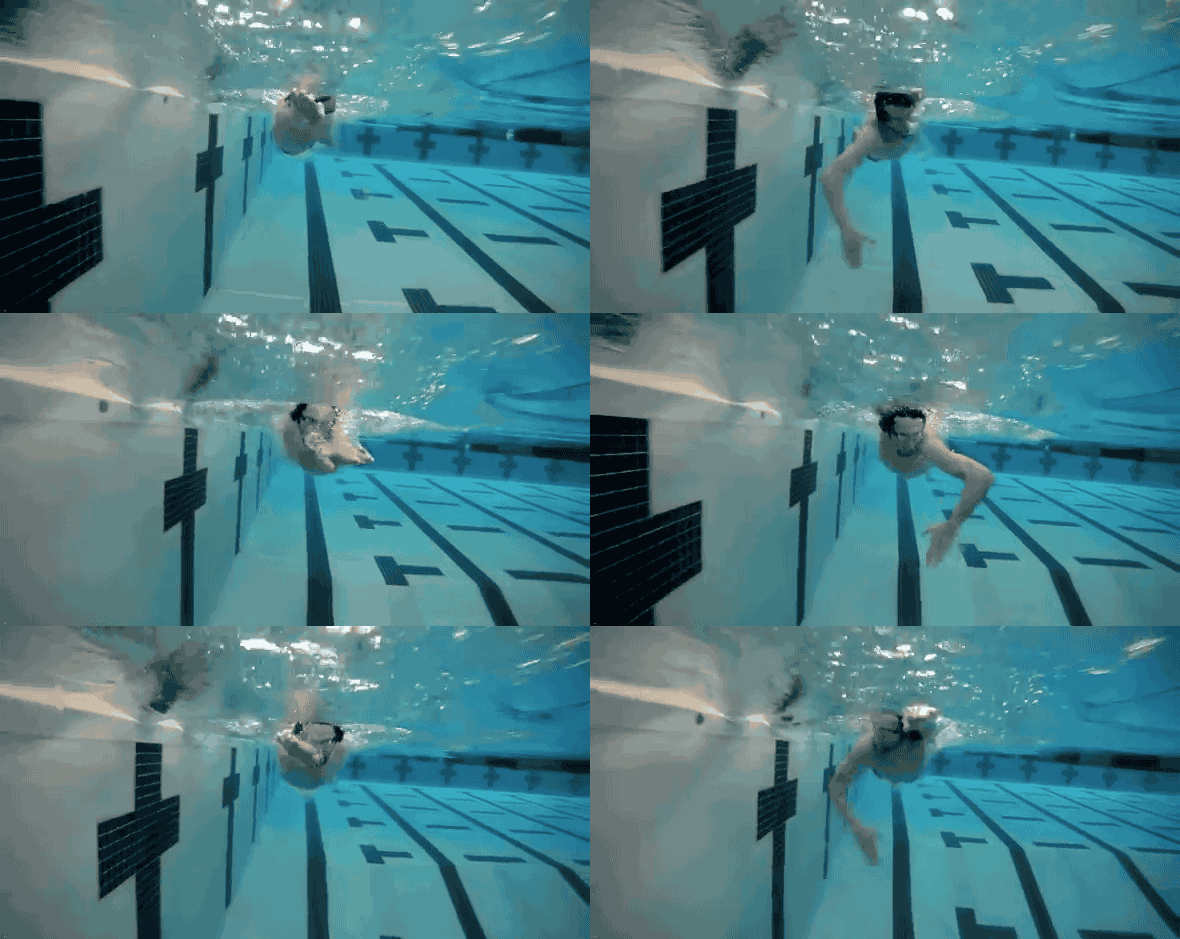
Arm stroke is the skill of generating propulsion through coordinated, efficient movements of the arms in the water—it’s a key technical element in swimming. Depending on the specific technique required for each stroke, arm movements can be categorized as follows: 1. Symmetrical, simultaneous strokes with both arms—seen in styles like breaststroke and butterfly. 2. Alternating, repetitive single-arm strokes performed in sequence—typical of freestyle and backstroke. 3. Asymmetrical, alternating strokes where each arm executes its own distinct movement—commonly observed in freestyle and other advanced techniques.
12. Paddling Route
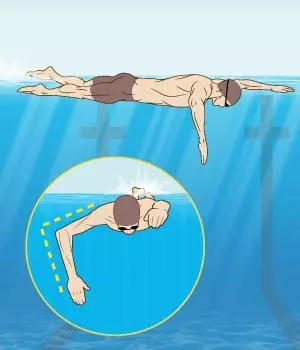
The "pull-through path" refers to the trajectory of the arm movement in the water that generates propulsive force. This path is closely tied to proper arm-stroke technique. Based on the principle that a couple of forces acting on an object can cause rotation, when swimming, the phase where the arm generates maximum propulsion requires the palm and forearm to move efficiently close to the body—this helps minimize lateral forces and ensures a straight, streamlined swim.
13. Coordination of Arm Movements
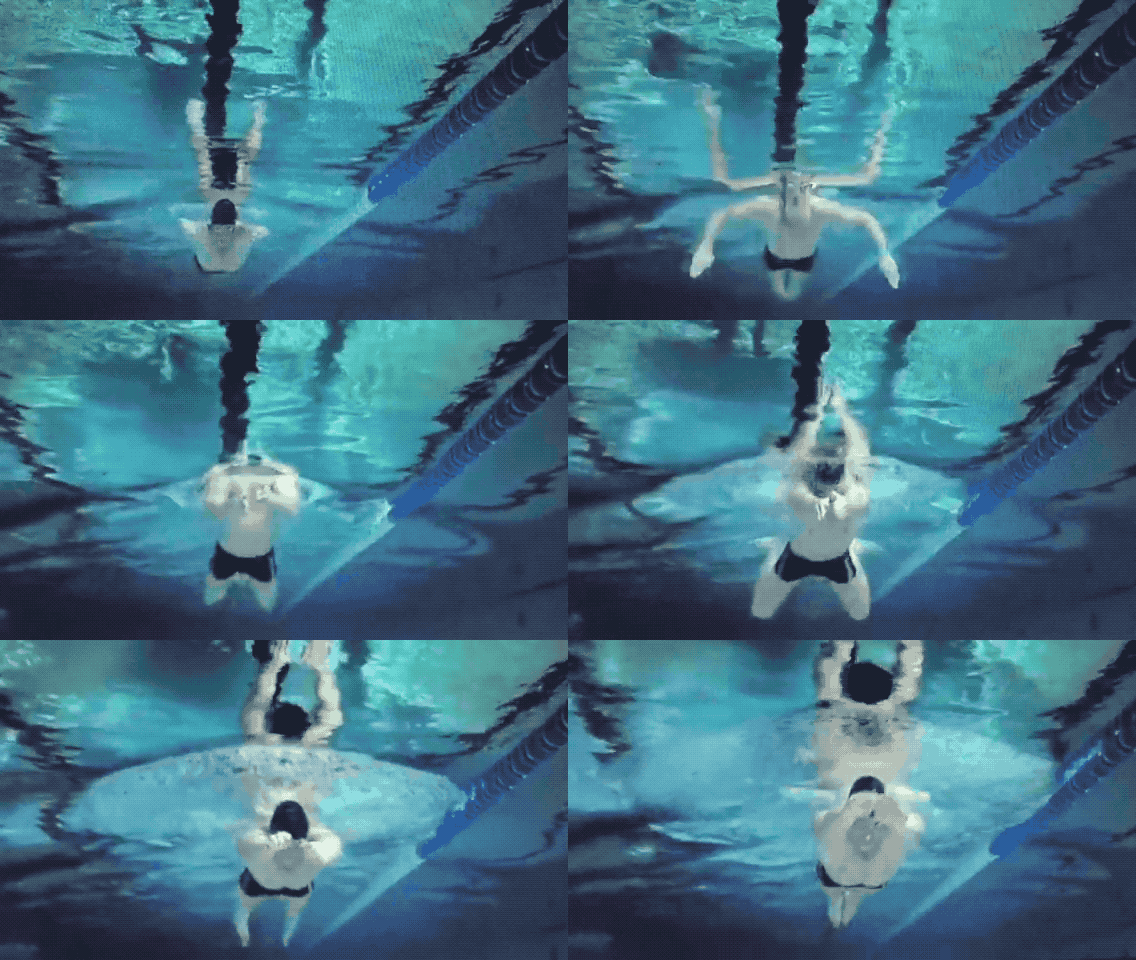
The coordinated and synchronized movement of both arms—working in tandem as they glide through the water—is essential for generating propulsion. Upper-body arm-stroke techniques serve as the primary source of forward momentum, and the harmony in these movements, combined with precise timing and efficient force application, is critical to maximizing speed and efficiency. In competitive swimming, arm-stroke techniques can be categorized into two main types: simultaneous, symmetrical strokes performed by both arms at once, and alternating, rhythmic strokes where each arm takes turns propelling the body forward.
14. Full-Body Coordination
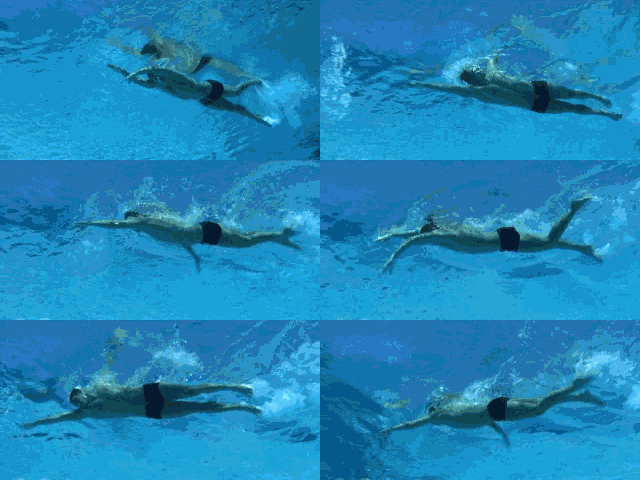
Complete coordination, in swimming refers to the combination of fundamental movements—such as leg kicks, arm strokes, and breathing—into a technically sound, harmonious, and rhythmic sequence that adheres to the specific techniques, order, requirements, and pacing of each swimming stroke. This skill demands not only precise and efficient execution of individual components but also emphasizes the seamless integration and fluidity of the entire movement pattern. It showcases an alternating rhythm of exertion and relaxation, enabling swimmers to conserve energy, maximize speed, and maintain a consistent, steady pace throughout their swim.
15. Rely on shaft extension shoulders
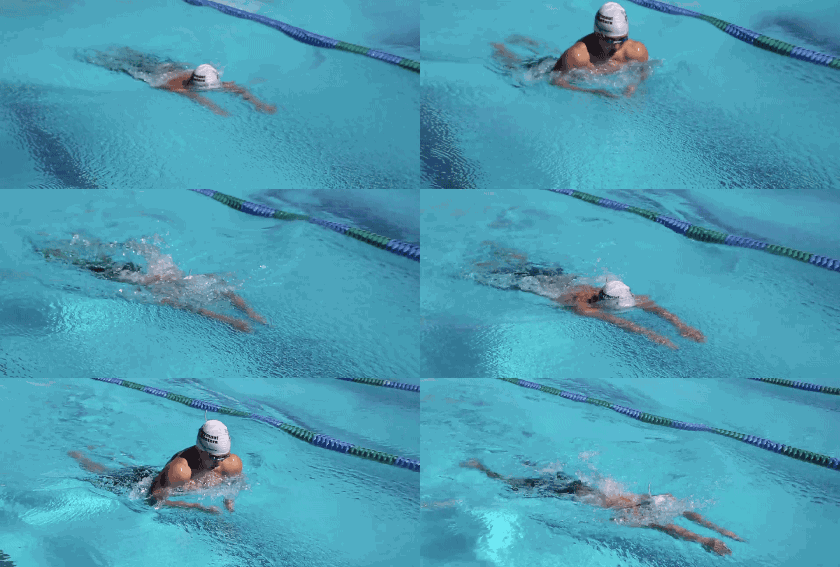
The frog-style arm extension technique involves actively driving the arms forward, emphasizing a strong shoulder roll that pushes the hands together while keeping the elbows close. This adjustment optimizes the body’s angle of attack in the water, helping to elevate the body position and increase the amplitude of the arm stroke. Additionally, it aids in reducing frontal drag during the recovery phase, thereby enhancing overall forward propulsion.
16. Long Arm Stroke
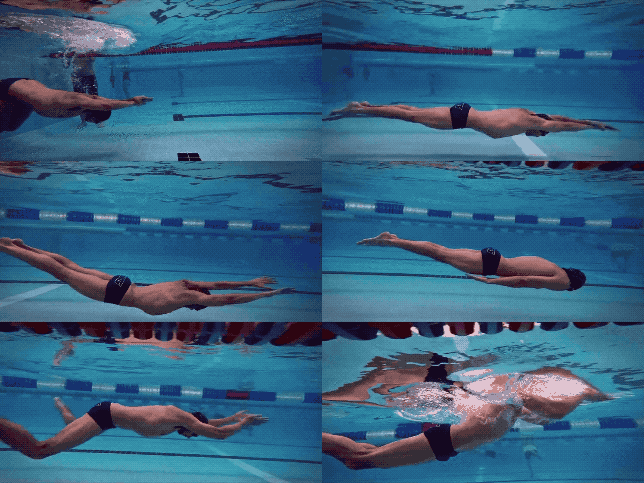
One of the techniques used in the breaststroke arm stroke. It’s performed during underwater swimming as well as after a breaststroke start or turn—specifically, it’s the initial underwater pull with a relatively large amplitude, enabling significant forward propulsion.
17. Pedal-and-clamp Movement
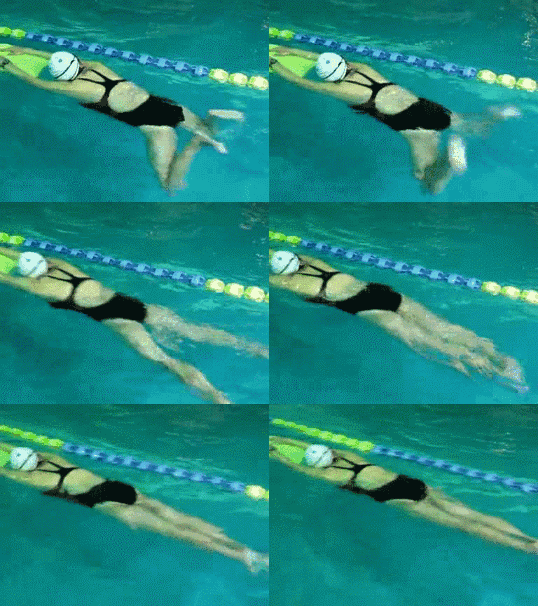
The key to the frog kick technique lies in its leg movement components. Both legs push off simultaneously, using the soles of the feet and the inner sides of the shins as the contact surface against the water, driving the body backward and laterally. The foot trajectory follows an outward, then backward, and finally inward arc—gradually accelerating into a whip-like extension. This creates a seamless motion that combines pushing and squeezing actions in one fluid sequence. At the end of the movement, the legs come together and straighten out, while the thighs are slowly lifted upward, achieving a streamlined body position.
18. Whipping Motion
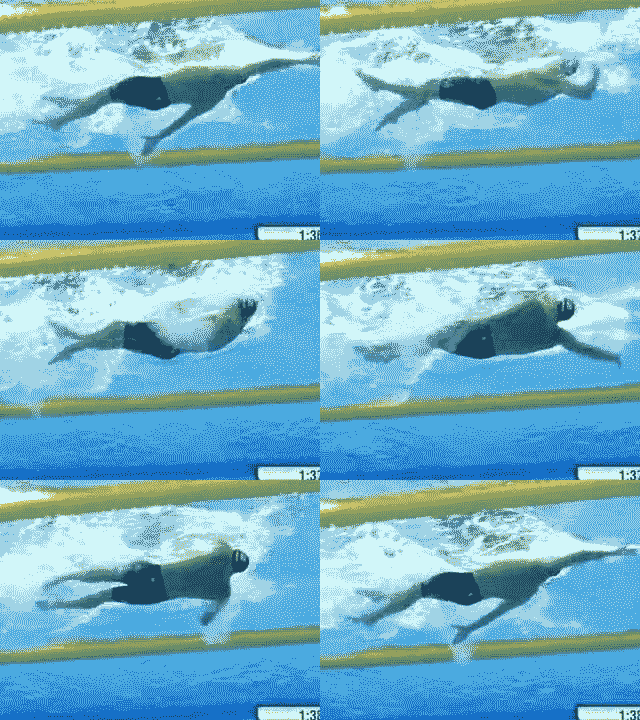
Refers to the instantaneous leg movements that generate propulsion through kicking. In freestyle and butterfly, this involves downward kicks, while in backstroke, it’s an upward kick—each requiring a powerful, elastic motion reminiscent of a whip cracking through the water.
19. Action Cycle
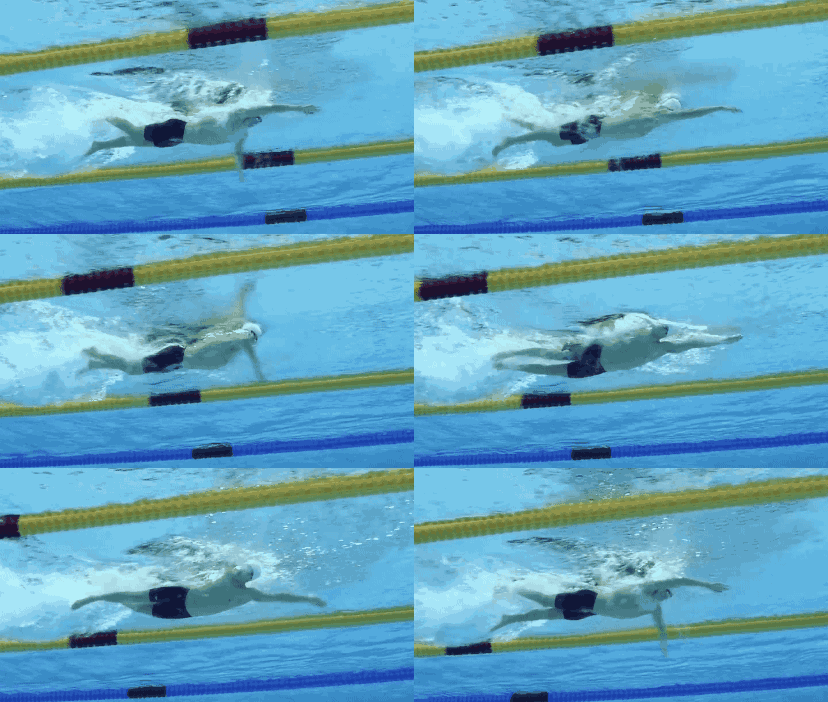
The time required for one cyclical movement, expressed in seconds per cycle. Different swimming strokes are defined by the rhythmic sequence of movements specific to each stroke, creating a continuous, repeating cycle—typically beginning with the instant an arm initiates its motion and completing a full cycle when both arms have completed one full lap and return to their original positions.
20. Bend the arm and sweep the water with a high elbow
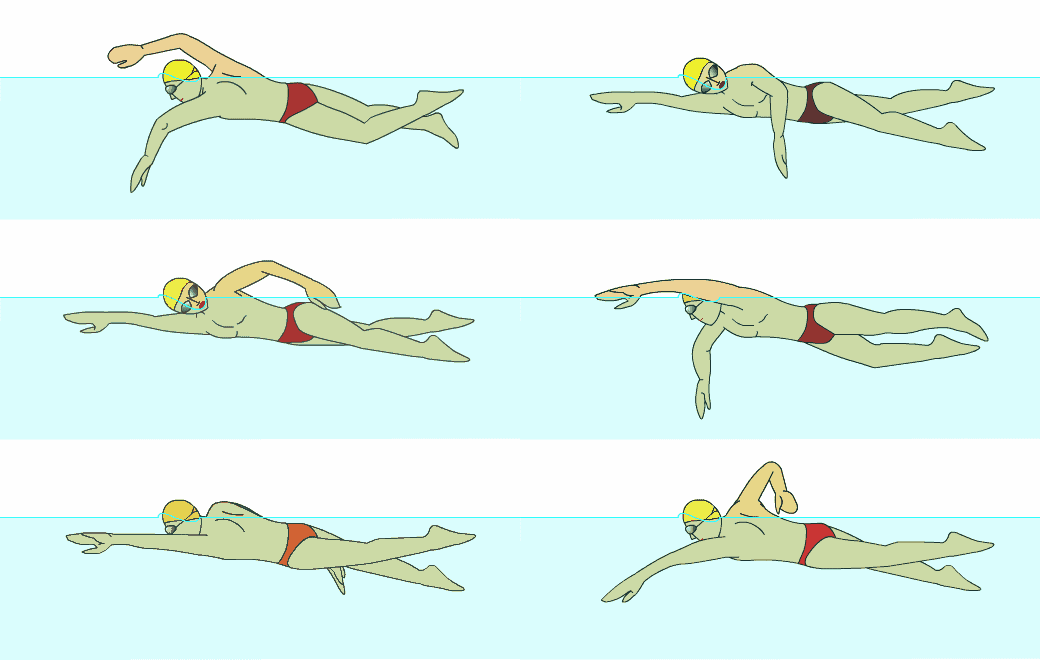
Elbow-up, bent-arm sculling refers to a swimming stroke technique where the arm first bends and then extends during the recovery phase, with the elbow joint consistently positioned higher than the hand and forearm.
Related Articles
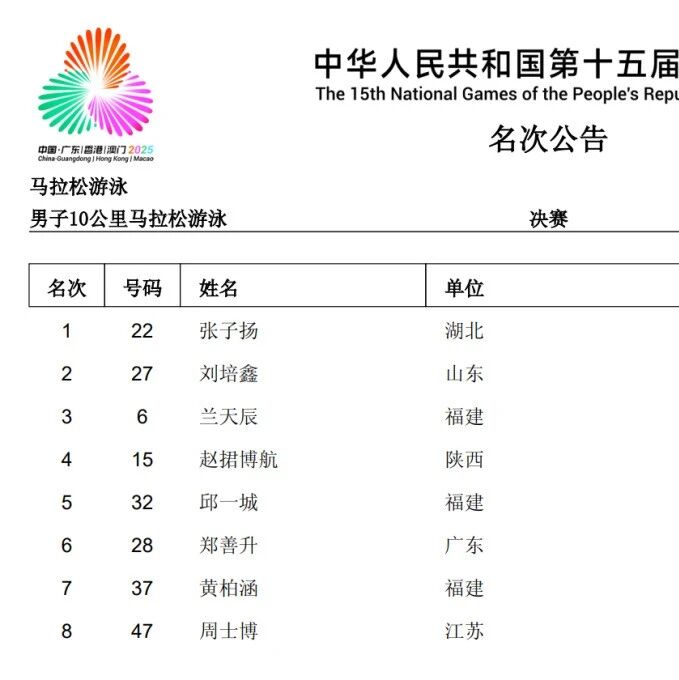
Results Summary: Men's 10km Marathon Swimming at the 15th National Games Zhang Ziyang defends his title to claim gold, while Liu Peixin secures the silver medal, and Lan Tianchen takes home the bronze.
Diving | Champion + Finishes No. 5, Wrapping Up National Games Journey—Quan Hongchan Responds to Future Diving Plans: "We'll See."